
SYBAU is a popular slang term used in texting, online chats, and social media. You may see it in comments, memes, or messages between friends. Its meaning can sound rude, so it is important to understand how people use it.
In this guide, we will explain the meaning of SYBAU in simple words. You will learn how people use it in text messages and online conversations. Keep reading to understand this slang term and when to avoid using it.
SYBAU Meaning Explained
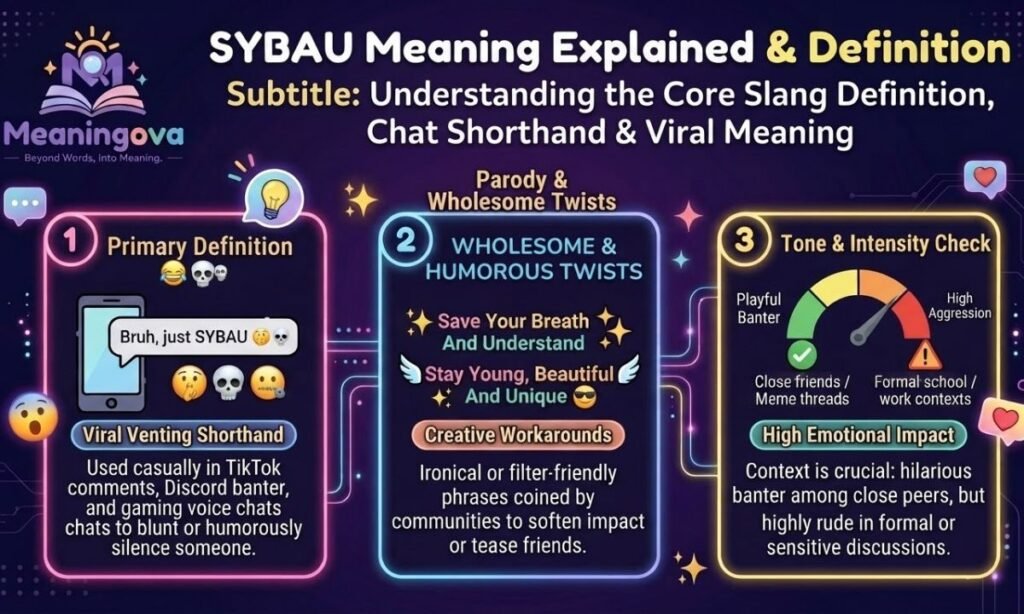
SYBAU is an internet slang acronym for “Shut Your B*tch Ass Up.” It is a blunt way of telling someone to be quiet, stop talking, or drop a topic. Depending on tone, it can be an angry insult or a joking comeback between friends. Because of the profanity in the full phrase, it is considered crude and not suitable for formal or professional settings.
Quick Examples
“Bro, sybau, you’ve been talking about that game for an hour.” A friend might reply “sybau 😭” to a corny joke. In a comment section, you may see “sybau and watch the video.” Another example is a playful “sybau, I’m trying to focus” sent in a group chat.
Primary Meaning
The primary meaning is a direct command to stop talking. It expresses annoyance, disbelief, or frustration at what someone just said. Used seriously, it is rude and confrontational. Used jokingly, it is closer to “stop it” or “you’re ridiculous.”
Secondary Meaning
The secondary meaning is a lighthearted, ironic reaction with no real hostility. Friends use it to tease each other, respond to a bad joke, or hype up an unbelievable moment. Often it is said with laughing emojis to make the playful tone clear. In this case it works more like a meme reaction than an actual demand for silence.
Background & Origin of SYBAU
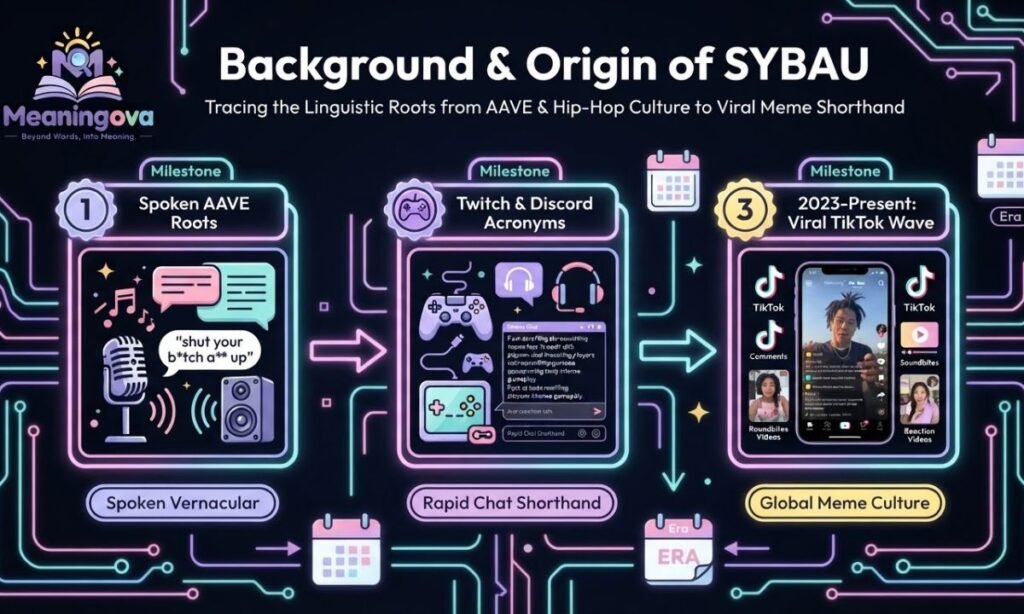
SYBAU grew out of online slang culture, where long insults and commands get shortened into quick acronyms. It spread through text chats, short videos, and meme pages, mostly among teens and young adults. The exact first use is hard to trace, as with most internet slang. Its style follows older acronyms like STFU, but with a more modern, meme-driven edge.
Why It Became Popular
Its popularity comes from being short, punchy, and easy to type in a fast conversation. Meme edits, TikTok sounds, and comment-section jokes helped it reach people who never used it in real life. The over-the-top bluntness made it funny when used ironically. Gen Z and Gen Alpha also enjoy slang that feels slightly edgy and insider.
How SYBAU Is Used in Different Contexts
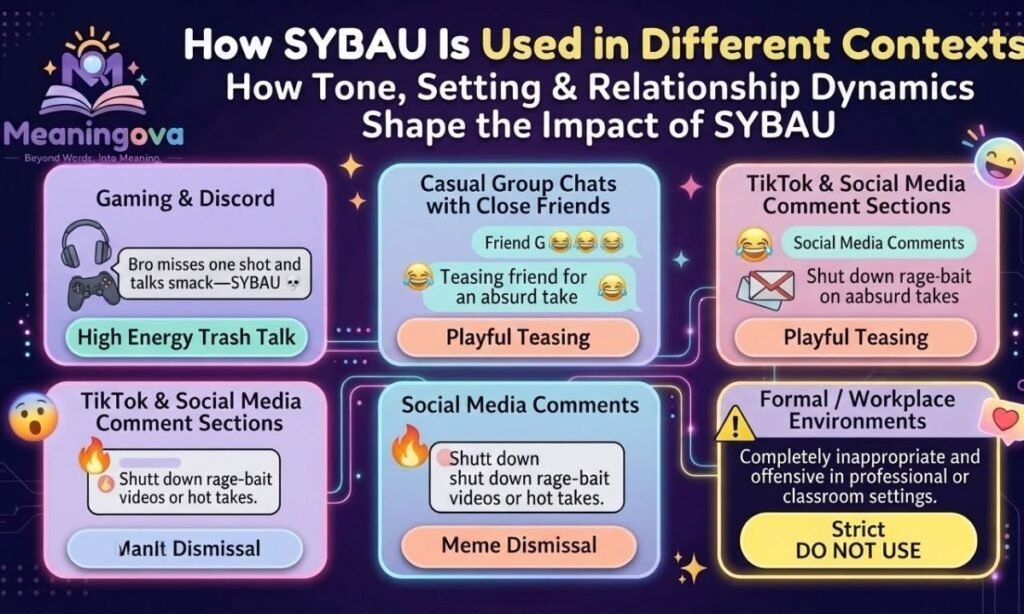
SYBAU shifts between insult and joke depending on the speaker and the audience. Among close friends it is usually playful, while with strangers it can sound hostile. Most users now treat it more as a meme than as a serious command. Knowing the relationship and the setting is key to using it safely.
1. Casual Friend Chats
In friend chats, SYBAU is a teasing way to respond to jokes, exaggerations, or embarrassing stories. It is usually followed by laughing or crying emojis so nobody takes offense. People use it to playfully shut down a friend who is bragging or complaining. Close friends usually understand the tone, but newer acquaintances may not.
2. Gaming Communities
In gaming, SYBAU appears in voice chat, lobbies, and Discord servers when someone is being loud, annoying, or trash-talking. It can be a joke after a missed shot or a heated moment in a match. Sometimes it is part of friendly banter, and other times it is used to mute a toxic teammate. Since gaming chats can get heated, the same word may start an argument.
3. Meme Culture
In meme culture, SYBAU is a punchline, often attached to absurd videos, awkward clips, or exaggerated reactions. Creators use it as a caption or sound to show disbelief or comedic anger. Its overuse is part of the joke, as people repeat it in different, silly situations. This has turned it into a recognizable internet reaction instead of a literal insult.
4. Arguments Online
In online arguments, SYBAU is often used as a dismissive insult to end a debate or shut someone down. In this setting it is usually serious and can escalate the conflict quickly. Many platforms may flag or remove comments that use it aggressively. It rarely helps win an argument and often makes the speaker look less credible.
Important Note
SYBAU contains profanity, so it should be avoided around children, in schools, and in workplaces. Even if you mean it as a joke, others may read it as aggressive or disrespectful. Text lacks tone, so playful intent can easily be misunderstood. When in doubt, choose a softer phrase like “okay, that’s enough” or “stop, you’re killing me.”
SYBAU Meaning Across Social Media Platforms
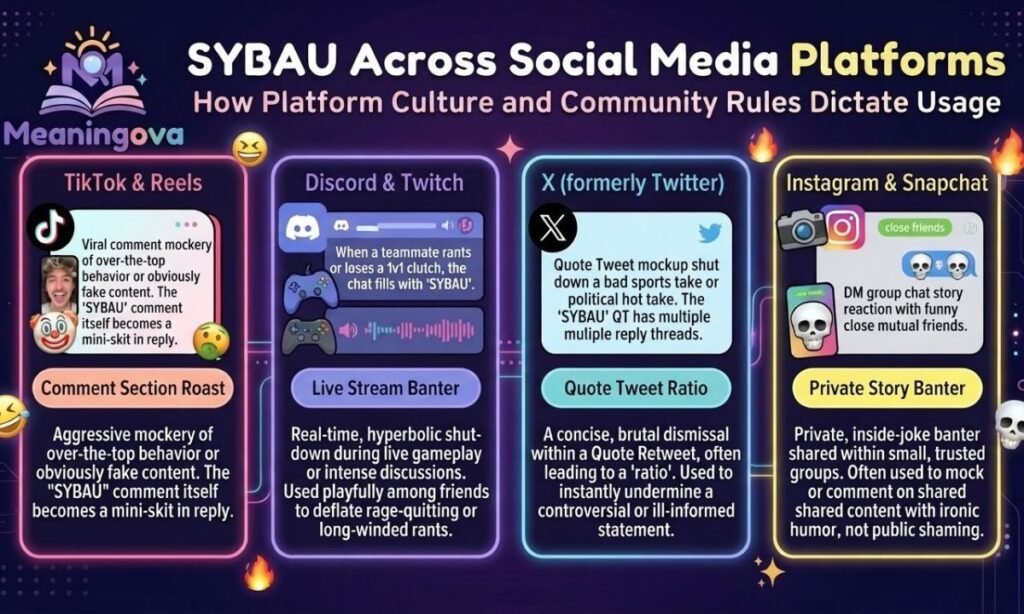
The core meaning stays the same on every platform, but the tone changes with the audience. Private chats lean playful, while public comment sections can turn confrontational. Moderation rules also affect how openly the term is used. Each platform gives SYBAU a slightly different flavor.
According to Gen Z
For Gen Z, SYBAU is mostly an ironic, meme-style reaction rather than a genuine insult. It is used to tease friends, react to cringe, or respond to unbelievable claims. The edgy humor is part of the appeal, but it still carries a rude origin. Many young users know exactly when it is a joke and when it crosses a line.
On WhatsApp, SYBAU is sent mostly in private chats and friend groups as a joking reaction to stickers, voice notes, or memes. The closer the relationship, the safer it is. It is usually softened with emojis like 😂 or 💀. Family or work groups are not the place for it.
On Instagram, SYBAU shows up in Reels comments, DMs, and Story replies, often as banter under funny or controversial posts. It can be used playfully or to shut down a critic. Public comments using it may feel harsher than private messages. Brands and public figures usually avoid it.
TikTok
TikTok is one of the main places where SYBAU spread, thanks to meme videos, sounds, and comment-section jokes. Creators use it as a punchline and viewers drop it in replies to react to cringe or absurd moments. The tone is mostly humorous, but it can also appear in heated comment fights. Its fast-moving trends keep it visible.
Snapchat
On Snapchat, SYBAU appears in quick chat replies and captions between friends, where messages disappear and the tone is relaxed. It is often paired with funny filters or emojis. Because the conversation is private, it usually reads as teasing. With people you do not know well, it can still come across as rude.
On Facebook, SYBAU is less common because the platform’s audience is older and more mixed. When it does appear, it is usually in comment arguments or in meme groups. Older users may not understand it or may find it offensive. Use it sparingly, if at all, on this platform.
Other Meanings of SYBAU in Technical or Professional Fields
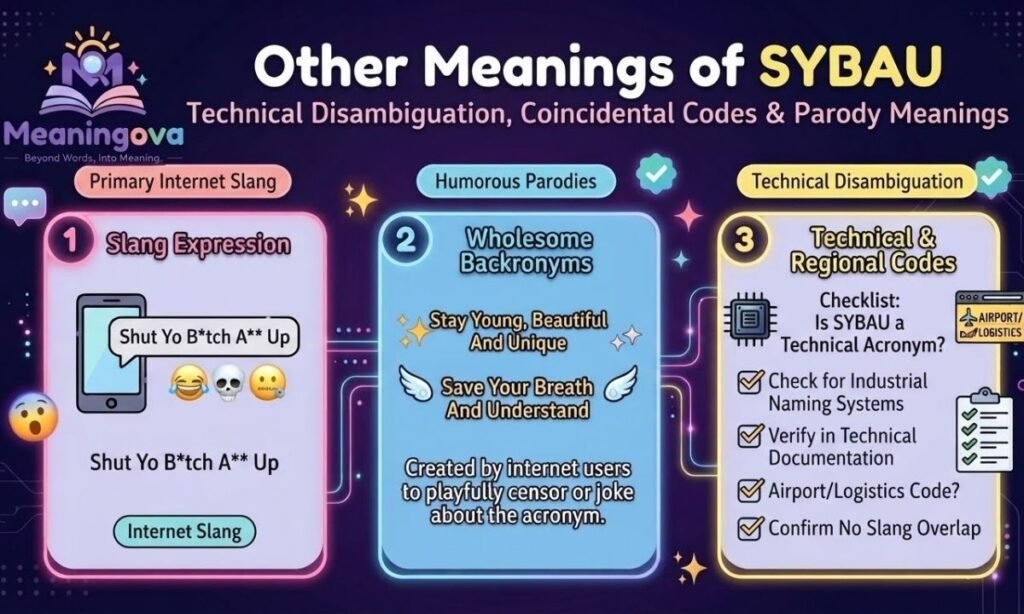
SYBAU does not have a recognized meaning in science, business, medicine, or other professional fields. It is purely an internet slang term. The only other uses are as a username, a nickname, or a random code. If you see it in a technical document, it is likely unrelated or a typo.
Important Distinction
Do not confuse SYBAU with real professional abbreviations that look similar. Its meaning belongs only to casual online communication. In formal settings, treating it as a technical term would cause confusion. Always rely on context to know whether it is slang or just a coincidental set of letters.
Common Misconceptions About SYBAU

Many people misunderstand SYBAU because its meaning changes so much with tone and context. Some assume it is always an insult, while others think it is harmless because it appears in memes. In reality it sits somewhere in between, and the speaker’s intent decides how it lands. Understanding these common mistakes helps you avoid awkward or offensive moments.
Thinking It’s Always Serious
Not every SYBAU is an attack. Among friends, it is often a joking reaction to a silly comment, a bad pun, or an exaggerated story. Emojis like 😂 or 💀 usually signal that the person is playing around. Treating every use as hostile can lead to unnecessary arguments.
Assuming It’s Professional Slang
SYBAU has no place in professional or technical settings, even though it looks like a standard acronym. It is crude internet slang and would sound disrespectful in emails, meetings, or workplace chats. Some people mistake it for an industry abbreviation because of its short, code-like form. It is best kept strictly for casual online conversation.
Believing It’s Friendly Everywhere
The playful tone that works in a close friend group does not carry over to every platform or audience. In a public comment section, the same word can read as rude or aggressive. Cultural background, age, and personal humor all affect how people react. What feels like banter to one person may feel like disrespect to another.
Using It With Strangers
Saying SYBAU to someone you do not know is risky because they have no context for your tone. It can easily be taken as an insult, leading to conflict or reports. Even if you meant it as a joke, text strips away voice and facial expressions. With strangers, a polite phrase is almost always the safer choice.
Similar Terms & Alternatives

Slang with a similar “stop talking” meaning includes STFU, “bro be quiet,” “stop capping,” and “chill out.” Meme-style reactions like “not you again 💀” or “bro what” also work for the joking tone. For formal situations, “please let me finish” or “let’s change the topic” are clear and polite. Pick the option that matches both your relationship with the person and the platform.
Softer Alternatives
If you want to tell someone to stop without being rude, try “okay, that’s enough,” “you’re killing me,” or “stop, I can’t 😂.” Lighter slang like “bro, stop” or “chill” keeps the playful energy without profanity. In group chats, “let’s move on” is neutral and respectful. These options work well when you want to keep the vibe friendly.
How to Respond to SYBAU

Your reply should depend on whether the message was a joke or a real attack. Reading the emojis, the person, and the situation helps you decide quickly. A calm response usually works better than escalating. If you feel disrespected, you are free to set a boundary.
If It’s Joking
If a friend says it playfully, match the tone with humor and keep things light. You can send a laughing emoji, a teasing reply, or a quick joke back. There is no need to take offense when the intent is clearly friendly. Showing you can laugh along keeps the conversation fun.
If It’s Aggressive
If SYBAU is used to attack or silence you, stay calm and avoid answering with more insults. You can set a clear boundary, such as “Please don’t speak to me like that.” On public platforms, you can also mute, block, or report the person. Walking away from the conversation is a valid choice, too.
Chat-Style Examples
A playful reply: “Bro sybau 😂 you’re the one who started it.” A neutral reply: “Okay okay, I’ll stop talking about it.” A boundary reply: “That’s rude, please don’t talk to me like that.” A lighthearted comeback: “Make me 😏,” used only if you are sure the person is joking.
Differences Between SYBAU and Similar Slang
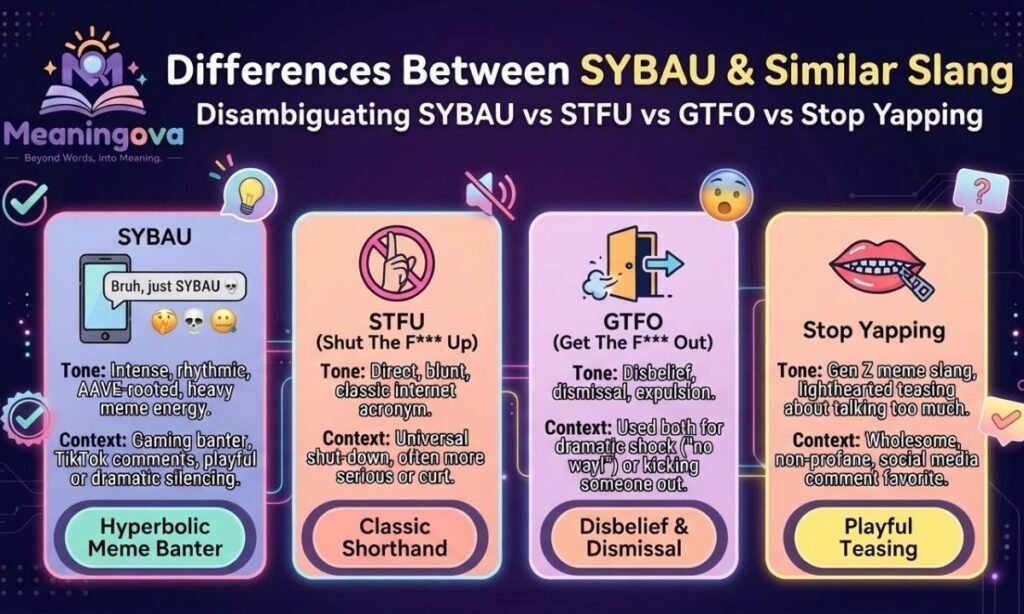
SYBAU shares a lot of DNA with other “be quiet” phrases, but each one carries a different level of intensity and style. Some are blunt, some are polite, and some belong to different corners of internet culture. Comparing them helps you pick the right phrase for the situation. Here is how SYBAU stacks up.
SYBAU vs STFU
Both tell someone to stop talking, and both contain profanity. STFU is older and more widely recognized, appearing in everything from forums to movies. SYBAU feels newer, more meme-driven, and more tied to Gen Z humor. The tone can be equally harsh, but SYBAU is more often used ironically.
SYBAU vs “Be Quiet”
“Be quiet” is a plain, non-profane request and can be used with kids, coworkers, or strangers. SYBAU is far more aggressive and informal, with a stronger insult built into it. One is polite or neutral, while the other is edgy and expressive. Choose “be quiet” when you want to avoid offense.
SYBAU vs “Ratio”
“Ratio” is a social media term meaning a reply gets more likes than the original post, showing public disagreement. SYBAU is a direct command to stop talking, not a measure of popularity. One is a scoreboard-style burn, while the other is a verbal shutdown. They can appear in the same argument, but they do different jobs.
Why SYBAU Matters in Online Conversations & Dating Apps
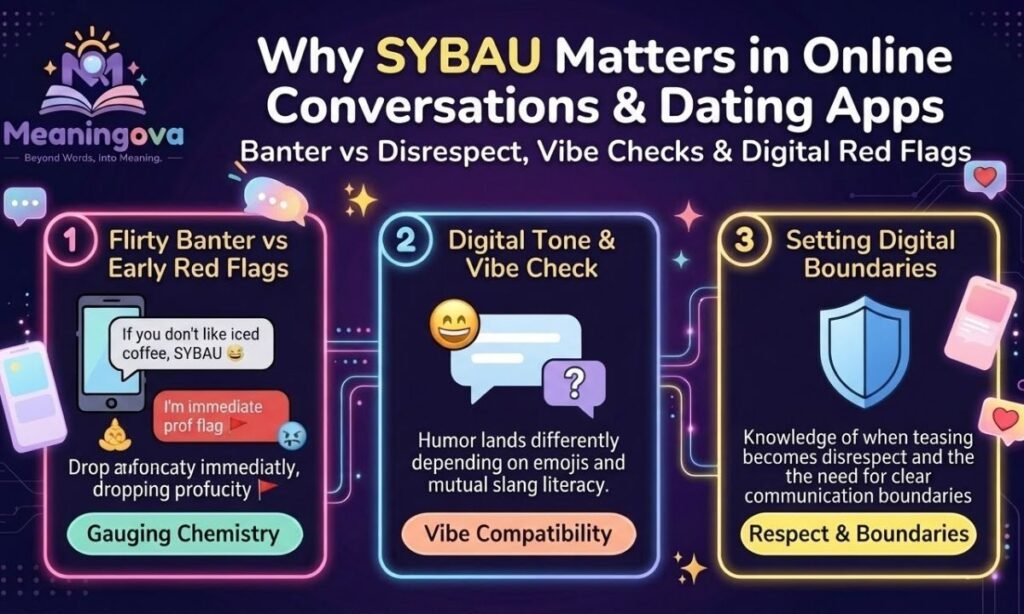
Understanding SYBAU helps you read tone correctly and avoid miscommunication in digital spaces. It is a good example of how a few letters can change from a joke into an insult. Knowing when to use it, ignore it, or avoid it protects your relationships and reputation. It also helps parents and moderators spot potentially harmful language.
In Dating Apps
On dating apps, SYBAU can seriously backfire because the other person may not know your humor yet. Even playful use may feel rude or aggressive in early conversations. Most people respond better to friendly teasing that does not rely on profanity. If you want to flirt through banter, choose gentler phrases and read the other person’s reactions first.
In Online Communities
In online communities, SYBAU appears in comment sections, group chats, forums, and live streams, often as banter or to shut down an annoying user. Moderators may treat it as rule-breaking if it targets someone. Within meme-heavy groups, it can be accepted as part of the culture. Always check the community rules before using it.
Popularity & Trends Over Time

SYBAU rose in popularity as short-form video platforms and meme pages made it widely visible among younger users. Its use peaked whenever it was attached to viral sounds, edits, or trending jokes. Over time, it has become a recognizable part of Gen Z and Gen Alpha slang. Like most slang, its popularity may shift as new phrases replace it, but it remains widely understood for now.
Why Internet Slang Evolves Fast
Internet slang changes quickly because social media spreads new phrases to millions of people within days. Young users constantly remix words to sound original, funny, or part of an inside group. Trends also fade fast once older audiences start using a term. This constant cycle keeps online language fresh and unpredictable.
Frequently Asked Questions
What does SYBAU mean in texting?
In texting, SYBAU stands for “Shut Your B*tch Ass Up.” It tells someone to stop talking, either as a joke between friends or as a real insult.
What does SYBAU mean on TikTok?
On TikTok, SYBAU is mostly a meme-style reaction used in comments and videos to show disbelief or tease someone. It is usually humorous, but it can still sound rude.
Is SYBAU a bad word?
Yes, SYBAU contains profanity, so it is considered crude. Even when used jokingly, it should be avoided around kids, at school, and at work.
What does SYBAU mean from a girl or a guy?
It means the same thing no matter who says it. If it comes with laughing emojis, it is usually playful teasing, and without them it may be an annoyed or serious reaction.
How do you respond to SYBAU?
If it is a joke, reply with humor or a laughing emoji. If it is aggressive, stay calm, set a clear boundary like “Please don’t talk to me like that,” or block and report the person.
What is the difference between SYBAU and STFU?
Both mean “be quiet” and both use profanity. STFU is older and more widely known, while SYBAU is newer and more tied to Gen Z meme culture.
Conclusion
SYBAU is a slang term you may see in text messages, online chats, and social media comments. It is often used as a rude way to tell someone to be quiet. The exact meaning can depend on the conversation and the tone.
We hope this guide has helped you understand the meaning of SYBAU. Always consider the context before using internet slang in a conversation. Since SYBAU can sound offensive, it is best to use it carefully.
More Meanings on Meaningova.com